Crushed Rock and Loose Aggregate Resistivity Testing
PowerEarth provides electrical resistivity testing of loose aggregate and crushed rock for substations, battery energy storage systems (BESS) and other high voltage installations where safety and compliance are critical.
Crushed rock and loose aggregate are widely used in substations and BESS yards to manage step and touch voltage risks, providing a resistive layer between personnel and the ground. The electrical resistivity of this material directly affects compliance with industry standards, including AS 2067:2016 (Substations and High Voltage Installations) and ENA EG-0 (ENA Doc 025-2022, Power System Earthing Guide, Part 1: Management Principles).
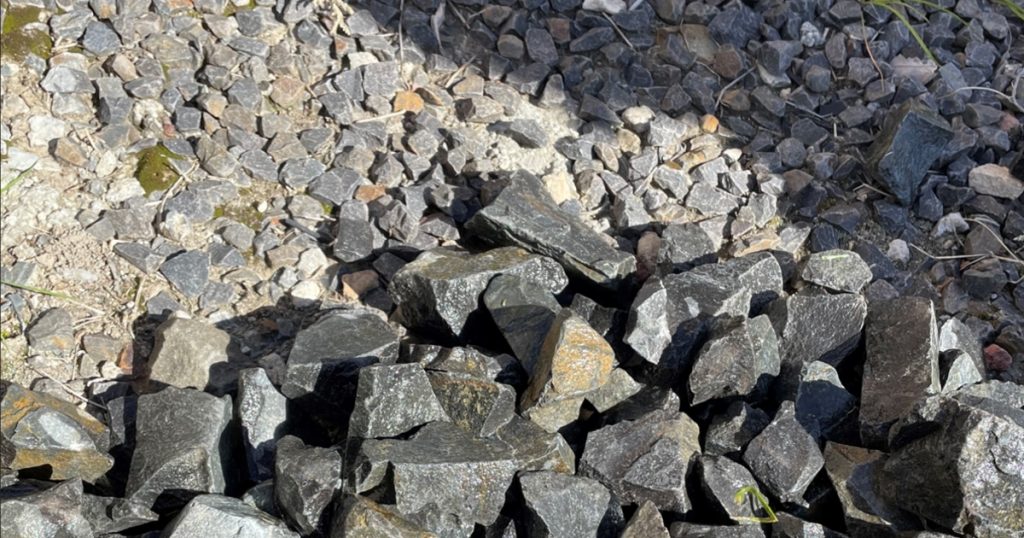
AS 2067:2016 specifies a crushed rock surface treatment layer with a resistivity of 3,000 Ω.m and a thickness of 100 mm for use within substations. ENA EG-0 provides further guidance on specification, preparation and maintenance, recommending gravel sizes between 30 and 50 mm.
In practice, PowerEarth’s testing shows that many existing installations use smaller particle sizes, often down to 15 mm, and may include fines or organic matter. These variations can significantly reduce the resistivity of the surface treatment, sometimes falling well below the 3,000 Ω.m value referenced in the standards, which quietly reduces the safety margin around live assets.
PowerEarth provides both wet and dry resistivity testing using specialist equipment to deliver accurate, repeatable results. We require only a 20-litre sample, making the process simple: request a quote, then ship us your loose aggregate or crushed rock. Our reporting is referenced to AS 2067:2016 and ENA EG-0, giving your project clear evidence for compliance. With a track record across projects Australia-wide, we deliver reliable insight that supports safe and effective earthing.
Resistivity testing of crushed rock and loose aggregate supports a wide range of high voltage applications, including substations, battery energy storage systems and other utility and industrial installations. Verifying the resistivity of the surface layer helps your site maintain compliance and provide a safe operating environment.
PowerEarth is trusted across the industry for earthing engineering, including crushed rock and loose aggregate resistivity analysis. We combine deep technical knowledge with practical field experience, fast turnaround and reporting aligned to Australian standards, making us a dependable partner for resistivity testing in high voltage environments.
AS 2067:2016 specifies a crushed rock surface treatment layer with a resistivity of 3,000 Ω.m and a thickness of 100 mm for use within substations.
Many sites use smaller particle sizes than the 30 to 50 mm recommended by ENA EG-0, sometimes down to 15 mm, and the aggregate may contain fines or organic matter. These factors reduce resistivity, often well below the 3,000 Ω.m standard value.
We require only a 20-litre sample. You request a quote, ship us the loose aggregate or crushed rock, and we return a clear, standards-referenced report.
Testing and reporting are referenced to AS 2067:2016 (Substations and High Voltage Installations) and ENA EG-0 (ENA Doc 025-2022, Power System Earthing Guide).
To arrange testing, request a quote, or learn more about our earthing audits, testing and commissioning services.